
Power cuts can interrupt everything from lighting and fans to work-from-home setups, internet connectivity and everyday household activities. A well-planned inverter and battery system can keep essential appliances running when the main electricity supply is unavailable.
However, choosing the right inverter is not simply about buying the biggest model available.
The ideal system depends on your home size, the appliances you want to run, expected backup duration and battery capacity.
This becomes especially important for larger 3 BHK and 4 BHK homes, where the power requirement can vary significantly from one family to another.
Here is a simple guide to understanding the process.
The first step is to decide which appliances need backup during a power cut.
For many homes, the essential load may include:
Ceiling fans
LED lights
Wi-Fi router
Television
Laptop or desktop
Mobile chargers
CCTV system
Selected small appliances
A larger household may want to run more fans, more lights or additional electronics.
The inverter should be selected according to the expected total load rather than simply the number of rooms in the house.
Two 3 BHK homes can have very different power requirements.
One household may need backup for four fans and several lights, while another may require computers, television, networking equipment and additional appliances.
Inverter capacity is commonly expressed in VA or kVA.
The inverter must have enough capacity to safely handle the appliances connected to it.
If the connected load is too high, the inverter may go into overload or fail to provide reliable backup.
Choosing a system with a suitable margin above the expected load can provide more stable operation and flexibility.
This is why professional load calculation is useful before purchasing an inverter.
While the inverter controls and supplies power, the battery stores the energy.
A higher-capacity battery generally provides longer backup for the same load, although actual performance depends on several factors.
These include:
Battery capacity
Battery condition
Connected load
Inverter efficiency
Age of the battery
Charging condition
Customers sometimes focus only on inverter capacity and overlook battery selection.
A correctly matched inverter and battery combination is important for achieving practical backup performance.
A typical 3 BHK home may require backup for multiple fans, lights, Wi-Fi, television and perhaps a work-from-home setup.
Instead of choosing a fixed combination purely based on room count, calculate the appliances you actually want to run.
For example, a family that only wants fans, lights and Wi-Fi during an outage will require a different setup than someone who also needs office computers and entertainment systems.
At Sunrise Battery Hub – Liberty Store, inverter and battery combinations can be recommended based on actual household requirements.
Larger 4 BHK homes often have more electrical points and a higher possible load.
The household may want to operate additional fans, lighting zones, networking equipment, televisions and other essential devices.
Depending on the required backup duration, a higher-capacity battery setup may also be necessary.
Again, it is better to calculate the real electrical load than simply buy the largest inverter available.
An oversized system can increase cost unnecessarily, while an undersized system may result in overload and poor backup.
Backup duration is another major factor.
Some customers need only enough backup for short power cuts. Others may require several hours.
If power outages in your area are usually brief, a moderate battery capacity may be sufficient.
For longer outages, additional battery capacity may be required.
The best setup balances load, expected backup time and budget.
For modern homes with sensitive electronics, pure sine wave inverter systems are commonly preferred because they provide smoother power output.
Computers, televisions and other electronic devices can benefit from stable power quality.
When comparing inverter options, look beyond price and consider output quality, capacity, battery compatibility, warranty and after-sales support.
Even a well-selected inverter system needs proper battery care.
Battery terminals should remain clean and connections should be secure.
For battery types requiring maintenance, recommended maintenance practices should be followed.
Reduced backup time can sometimes indicate battery ageing, charging issues or increased household load.
If your inverter backup suddenly becomes much shorter, a battery inspection can help identify the cause.
Sunrise Battery Hub provides solutions from trusted power brands including Exide, Luminous, Microtek and other leading manufacturers, depending on product availability.
Choosing a reputable product gives you access to warranty support, established specifications and after-sales service.
As an Exide Warranty Partner, Sunrise Battery Hub also provides support for applicable Exide warranty requirements.
Correct installation is just as important as choosing the right inverter and battery.
Battery connections, cable sizing, ventilation and placement should be handled appropriately.
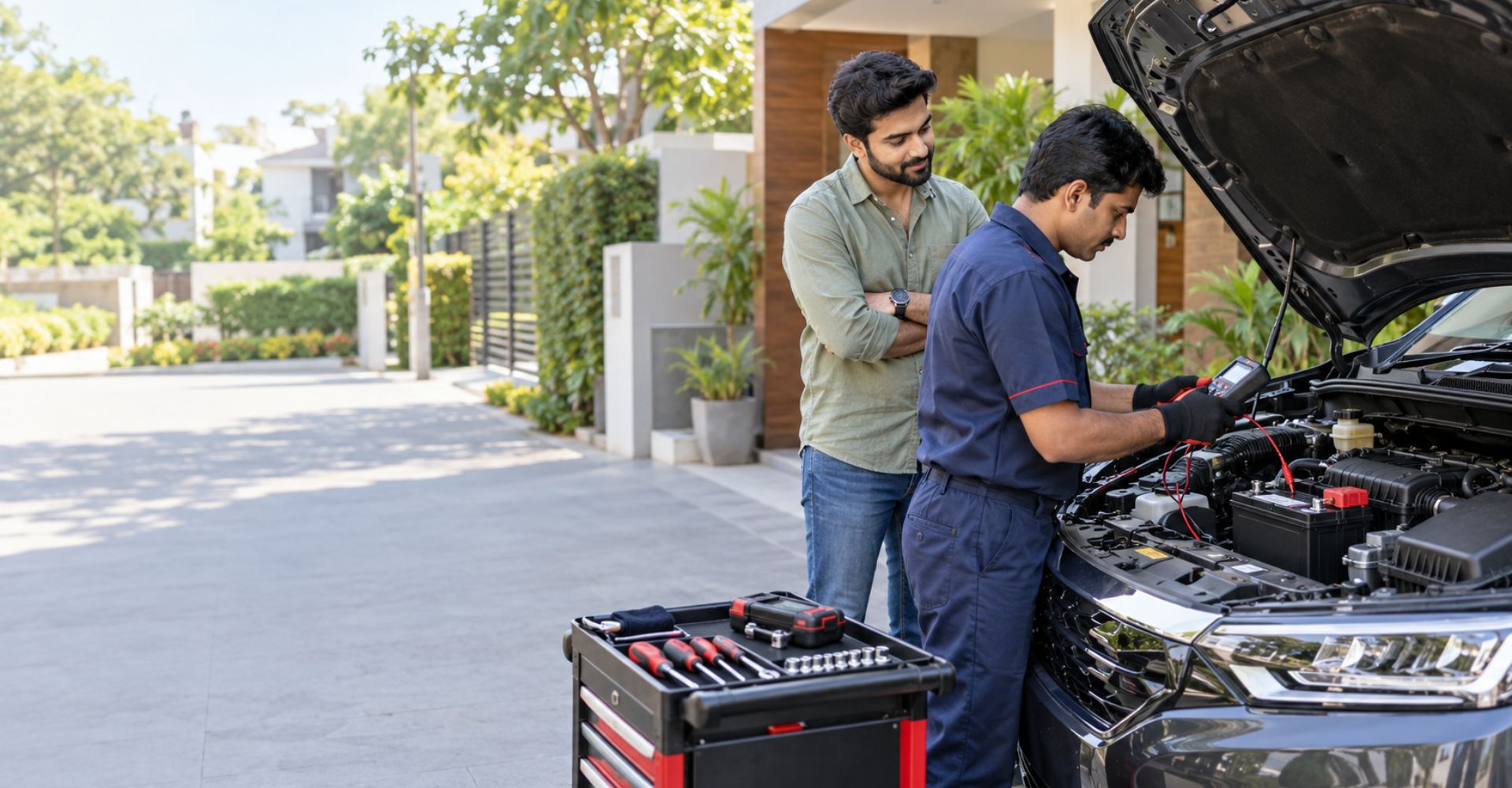
Sunrise Battery Hub also provides on-site inverter inspection and repair service in Bhopal for customers experiencing backup, charging or inverter-related problems.
There is no single inverter and battery combination that is perfect for every 3 BHK or 4 BHK house.
The best system is one that matches your actual load and desired backup duration.
Before buying, list the appliances you want on backup, estimate their combined load and decide how long you want them to operate during a power cut.
With locations across MP Nagar, Bawadiya Kalan, JK Road and Mandideep, Sunrise Battery Hub provides home inverter, battery and power backup solutions across Bhopal and nearby areas.
A properly planned inverter setup does more than keep the lights on. It keeps your home connected, comfortable and productive when the grid goes quiet.